
Vadzo Imaging Positions Bolt-1335MRS with Rockchip RV1126: Onsemi AR1335 13MP Monochrome MIPI Camera for Point of Care Diagnostic Imaging Devices
The Bolt-1335MRS is an Onsemi AR1335 13MP Monochrome MIPI Camera, and Vadzo is positioning it with the Rockchip RV1126
Press Release Disclaimer: This is a press release distributed through the XPR Media network. It has not been independently verified by our newsroom.


The Bolt-1335MRS is an Onsemi AR1335 13MP Monochrome MIPI Camera, and Vadzo is positioning it with the Rockchip RV1126 for point-of-care diagnostic imaging devices. Many diagnostic readers do not need color. They need to measure how bright a line, a spot, or a well is, and to measure it repeatably in a small, battery-powered instrument. A monochrome sensor has no color filter array, so more light reaches every pixel, and its 13 million pixels let software average thousands of them across a test line, which lowers random noise sharply. The Bolt-1335MRS pairs that sensor with an on-board ISP that applies auto-exposure, and it sends frames over MIPI CSI-2 directly to the processor. As a 13MP Monochrome RV1126 MIPI Camera, it supports on-device analysis, and it also works with Raspberry Pi and NVIDIA Jetson Orin Nano, Orin NX, and AGX Orin. Designed for handheld and portable diagnostic devices, it supplies clean, consistent grayscale images.
FORT WORTH, TX / ACCESS Newswire / October 29, 2026 / Vadzo Imaging, a provider of embedded vision camera products for OEMs and system integrators, today positions the Bolt-1335MRS with the Rockchip RV1126 as a 13MP Monochrome MIPI Camera for point-of-care diagnostic imaging devices. Built on the Onsemi AR1335 sensor and part of Vadzo’s MIPI camera portfolio, the Bolt-1335MRS combines a monochrome rolling shutter sensor, an on-board ISP, auto exposure, and a two-board design that offers 2-lane and 4-lane adapter boards. With this positioning, Vadzo presents a 13MP Monochrome RV1126 MIPI Camera for handheld and portable diagnostic instruments, together with guidance on pixel averaging, data rates, and on-device analysis.
Why a 13MP Monochrome MIPI Camera Suits Point-of-Care Diagnostic Readers
Point-of-care diagnostics move testing from the laboratory to the clinic, the pharmacy, the ambulance, and the home. The instruments are small, often battery-powered, and used by people who are not laboratory specialists. Many of them work by imaging a test, such as a lateral flow strip, a fluorescence assay, or a reaction well, and measuring how bright part of the image is. The measurement must be repeatable between units, between operators, and between days, because a small shift in the reading can change a result. Consistency is therefore a design goal, not a convenience.
Color is often a distraction. A color sensor spreads its light over three filtered channels, so each pixel collects only a fraction of the light that falls on it, and the camera must interpolate the missing values to build a full image. For a reader that measures intensity, those steps cost sensitivity and add processing, and they leave artifacts at sharp edges such as a thin test line. Dim signals, such as fluorescence or a faint line at a low concentration, are the cases where the lost light matters most. Removing the color step also shortens the processing chain.
Noise is the next limit. Every pixel carries random noise, and a faint line sits close to that noise. Averaging many pixels reduces the random part, and the more pixels that fall on the line, the stronger the effect. Resolution therefore matters even for readers that never show an image to a person. Exposure also matters. A test that is read slightly too bright or too dark gives a different number, so the camera must hold exposure steady, or report it, so that the software can correct for it. Illumination that stays constant makes both tasks easier.
Power and compute complete the picture. A handheld device has a small battery and little room for a heat sink, and it often has to analyze the image on the device, without a network. Teams that choose a camera and a processor separately discover late that they do not fit together, and in a regulated product, a late change is expensive. Choosing a camera and processor that are known to work together at the start avoids that risk.
How a 13MP Monochrome MIPI Camera Supports Image-Based Measurement
The Bolt-1335MRS is built on the Onsemi AR1335, a 13MP (4208 x 3120) monochrome rolling shutter sensor with a 1/3.2 inch optical format and 1.1 micron back-illuminated pixels. Back illumination routes light to the photodiode from the rear of the silicon, which improves light collection, and removing the color filter array lets still more light reach each pixel. The result is a stronger signal per pixel in dim scenes, which is the most effective way to reduce noise before any processing. Because the sensor reads the image row by row, the camera uses a rolling shutter, which suits the still samples that diagnostic readers examine. Instruments that image a moving sample should use a short exposure or a global shutter module, and handheld devices can add a rest or a guide to hold the sample steady during capture.
A short calculation shows why 13 million pixels are useful even when nobody looks at the image. Suppose, illustratively, that the camera views a field 70 millimeters wide. Across 4208 pixels, each pixel covers about 0.0166 millimeters, so a millimeter holds about 60 pixels. A test line 1 millimeter wide and 5 millimeters long then covers about 60 by 300 pixels, or 18,000 pixels. If the random noise in each pixel is independent, averaging 18,000 pixels reduces it by about the square root of that number, roughly 134 times. The assumptions are idealized, since fixed pattern noise and illumination variation do not average away, but they show how resolution turns into measurement quality. A longer or wider field of view changes the numbers, so teams should recalculate for their own optics.
The on-board ISP finishes the image inside the module. It applies auto exposure so that brightness stays suitable as the sample and the light change. White balance has no role in a monochrome image, since there is no color to balance, so exposure control is the ISP function that matters here. The module is a two-board solution, with the camera board and an adapter board in two variants, one for 2-lane MIPI CSI-2 and one for 4-lane. A 13MP frame at 8 bits per pixel is about 13 megabytes, so 10 frames per second would need about 130 megabytes per second, or about 1 gigabit per second, which is why the lane count matters. The 2-lane variant suits hosts with a simple connector, and the 4-lane variant provides more bandwidth. The choice also depends on how many lanes the processor board brings to its camera connector.
The Rockchip RV1126 is a compact processor with an image pipeline, a hardware video encoder, and a neural processing unit, and Vadzo has validated the camera with it, so a handheld device can run its analysis on the device. The module also supports Raspberry Pi and NVIDIA Jetson Orin Nano, Orin NX, and AGX Orin for teams that need more compute, and the connector on each carrier board determines which adapter fits. Teams should confirm the available modes, frame rates, and power figures against the product documentation, since a point-of-care device often depends on a tight power budget. A short bench test with the real board shows the achievable behavior within a day.
Illumination and optics decide how much of the sensor’s capability reaches the result, so a short note on them is worth including. A reader should light the sample evenly and keep that light constant, because uneven or drifting light adds variation that no amount of averaging removes. A stable light source, a diffuser, and a baffled enclosure that keeps out stray light are the usual tools. A black or neutral background around the strip or the well also helps, since reflections from nearby surfaces can raise the level around a faint line. The lens should be chosen so that the object fills the field of view as far as the working distance allows, because every pixel on the target adds to the average. A small flat field correction, taken from an image of an even white target, can remove the remaining shading across the frame. These steps are ordinary practice in quantitative imaging, and Vadzo can help customers plan the optics and the lighting during evaluation, so that the first prototype reads as well as the sensor allows.
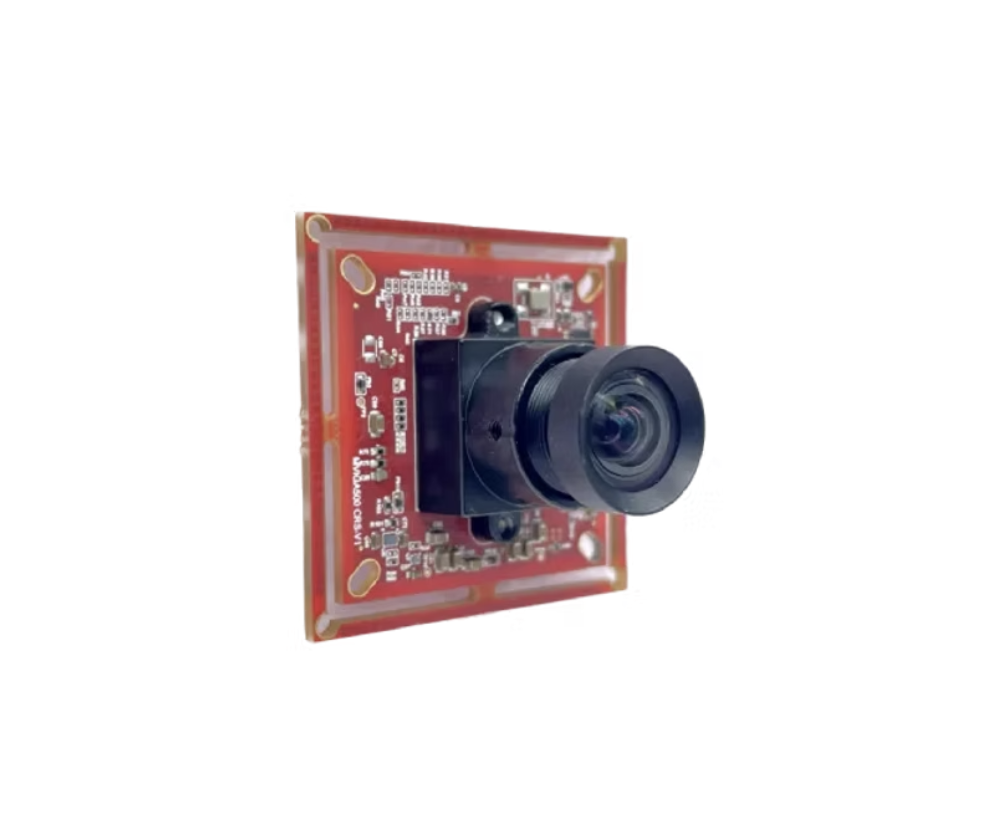
Product Overview
The Bolt-1335MRS is a 13MP monochrome MIPI module built on the Onsemi AR1335 sensor and positioned with the Rockchip RV1126 for point-of-care diagnostic imaging devices. As a 13MP Rolling Shutter Mono MIPI Camera, it offers high resolution at reasonable cost for still samples, and as an AR1335 Mono MIPI Camera, it gives every pixel a full share of the incoming light. The 13MP On-board ISP Mono MIPI Camera designation covers the finished image processing inside the module, and the 13MP Auto Exposure Mono MIPI Camera designation covers its automatic exposure control. The module combines the sensor, an on-board ISP, and a two-board design with 2-lane and 4-lane MIPI CSI-2 adapters. It also serves as a 13MP Mono MIPI CSI-2 Camera, an AR1335 Monochrome Rolling Shutter MIPI Camera, an AR1335 Monochrome MIPI CSI-2 Camera, and a 13MP Mono RV1126 MIPI Camera for designs that need a standard MIPI interface.
Key specs: 13MP (4208 x 3120) Max Resolution | Onsemi AR1335 1/3.2 inch Sensor Format | 1.1 micron Pixel | Monochrome with Rolling Shutter | 2 Lane and 4 Lane MIPI CSI-2 Interface | S-Mount (M12) Optics
Key Capabilities of the 13MP Monochrome MIPI Camera
Monochrome Imaging for Intensity-Based Measurement
A monochrome sensor has no color filter array, so more of the incoming light reaches each pixel, and it needs no color interpolation, so every pixel is a real measurement of brightness. For diagnostic readers that measure intensity, this gives a stronger signal in dim scenes, cleaner edges on thin test lines, and less processing. Teams that need color for a particular task can use a color module from the same family. Many readers combine a monochrome camera for measurement with a separate color view for the user.
Rolling Shutter Imaging for Stationary Diagnostic Samples
The sensor reads the image row by row, which gives high resolution and good low-light sensitivity at reasonable cost. Diagnostic readers examine still samples under controlled light, so the effect is invisible. Handheld devices that move during capture can show skew, and a steady rest or a short exposure reduces it. Vadzo offers global shutter modules in its portfolio for instruments where motion during capture is the main concern. Many benchtop and handheld readers do not need that, and the rolling shutter serves them well.
Rockchip RV1126 Integration for On-Device Image Analysis
The Rockchip RV1126 is a compact processor with an image pipeline, a hardware video encoder, and a neural processing unit, which suits a handheld device with a small battery. Vadzo has validated the camera with the RV1126, so it works as an AR1335 RV1126 Mono MIPI Camera and an RV1126 Mono MIPI Camera from the first day of evaluation. Because the camera sends a finished image, the RV1126 does not need to tune its own ISP for the sensor, which saves development time, and its neural processing unit can read a result on the device without a network. That matters in clinics and homes where a connection cannot be assumed.
Onboard ISP for Image Processing and Exposure Control
The on-board image signal processor finishes the image inside the module, so the host receives a processed frame and does not spend its own capacity on those steps. A 13MP Monochrome On-board ISP MIPI Camera, which is also an AR1335 Mono ISP MIPI Camera, applies the same processing on every unit, which supports repeatability between devices. Teams that need raw data and custom tuning should discuss a raw sensor module with Vadzo instead. For most readers, a finished image from the first day shortens development.
Auto Exposure for Diagnostic Image Capture
Auto exposure adjusts exposure and gain so that brightness stays suitable as the sample and the light change. As a 13MP Mono AE MIPI Camera and an AR1335 Auto Exposure Mono MIPI Camera, the module applies it inside the ISP. White balance does not apply to a monochrome image, because there is no color to balance. A quantitative reader should record the exposure value with each image, or fix the exposure under controlled illumination, so that results stay comparable between captures. Fixed illumination is the simplest way to make the exposure repeatable.
Integration with Raspberry Pi and NVIDIA Jetson Orin Platforms
The module also works with Raspberry Pi and with NVIDIA Jetson Orin Nano, Orin NX, and AGX Orin, which lets a team prototype on a familiar board and move to the processor that suits the product. As an NVIDIA Jetson MIPI CSI-2 Camera and an NVIDIA Jetson MIPI CSI-2 Camera Module, it keeps the camera constant while compute changes, and the connector on each carrier board determines which adapter fits. A team can validate the camera once and reuse that work across several boards.
Two-Board Design with 2-Lane and 4-Lane MIPI CSI-2 Adapters
The module is a two-board solution, with the camera board and an adapter board, and the adapter comes in two variants, one for 2-lane MIPI CSI-2 and one for 4-lane. The 2-lane variant suits hosts with a simple camera connector, and the 4-lane variant carries more data for higher frame rates. Teams choose the variant that matches the carrier board, and they can change it later without changing the camera board. As a 13MP Mono MIPI Camera Manufacturer, Vadzo supports adapter selection, lens matching, firmware customization, and enclosure design for volume programs. Teams moving from evaluation to production keep the same module and documentation.
“Diagnostic device makers told us that their readers do not need color. They need clean, repeatable brightness measurements from small samples, in an instrument that runs on a battery. The Bolt-1335MRS was positioned around that need. The monochrome sensor gives every pixel its full share of the light, the 13 million pixels let software average thousands of them across a test line, and the Rockchip RV1126 lets the device read the result itself. We are also plain about the limits. A rolling shutter suits still samples, white balance has no meaning in a monochrome image, and the device maker remains responsible for performance claims and the regulatory pathway. We help customers plan the optics, the lighting, and the exposure control, and we encourage them to test with real samples early.” – Alwin Vincent, Product Manager, Vadzo Imaging.
Applications of the Bolt-1335MRS in Point-of-Care Diagnostics
Monochrome Imaging for Lateral Flow and Immunoassay Readers
Lateral flow tests produce faint lines whose intensity relates to the amount of a target in the sample. The Bolt-1335MRS works as a point-of-care diagnostic MIPI Camera that images the strip under controlled light and lets software average thousands of pixels across each line. A fixed illumination, a consistent strip position, and a recorded exposure value keep readings comparable from one test to the next. Teams should also control the position of the strip, since small shifts change the pixels that fall on the line, and a simple guide or cartridge holder that seats the strip the same way every time removes much of that variation.
Image Capture for Fluorescence and Luminescence Assays
Fluorescence and luminescence assays produce dim light that a monochrome sensor collects more efficiently than a color one. The camera serves as a Diagnostic Imaging MIPI Camera behind suitable filters and excitation optics, which the device maker supplies. The rolling shutter suits static samples, and the on-board ISP keeps exposure steady across captures. Light leaks and stray reflections should be controlled in the enclosure, since a dim signal is easily swamped, and a dark chamber with a fixed excitation source is the usual design.
MIPI Camera Integration for Handheld Diagnostic Devices
Handheld devices have small batteries, little room for cooling, and users who move. The module functions as a Handheld Diagnostic Imaging MIPI Camera and a Portable Diagnostic Imaging MIPI Camera whose compact two-board design and direct MIPI connection to the RV1126 keep size and power low. Device makers should confirm power, weight, and temperature against the product documentation; they should check how the device behaves as the battery drains, and they should test capture while the device is held, because hand movement can blur a frame during a long exposure.
High-Resolution Monochrome Imaging for Point-of-Care Microscopy
Compact microscopes for blood smears and cell counts pair a camera with adapter optics. The module works as a Point-of-Care Imaging MIPI Camera at the camera port, where 13MP resolution captures fine detail, and the RV1126 can count or classify on the device. Magnification and field of view come from the optics, and Vadzo can help match the sensor to the adapter, while device makers remain responsible for performance claims and the regulatory pathway of the finished device. A short evaluation with real specimens shows how much of the benefit carries into the final product.
Frequently Asked Questions
Q: Why use a monochrome camera in a diagnostic reader?
A: Vadzo Imaging explains that most readers measure brightness, not color. A monochrome sensor has no color filter array, so more light reaches every pixel, and it needs no color interpolation, so every pixel is a real measurement. That gives a stronger signal for faint lines and dim fluorescence, and cleaner edges on thin test lines. A 13MP Mono MIPI CSI-2 Camera therefore suits quantitative readers, and Vadzo Imaging offers color modules for work that needs color, and a 13MP Mono MIPI CSI-2 Camera can sit beside a color camera in the same device.
Q: Does a monochrome camera need white balance?
A: No. White balance adjusts the relative strength of the red, green, and blue channels so that whites look neutral, and a monochrome image has no color channels. Exposure control is the function that matters, because a reading taken at a different exposure gives a different number. A 13MP Mono AE MIPI Camera adjusts exposure automatically, and Vadzo Imaging recommends recording the exposure value with each image or fixing it under controlled light, since a 13MP Mono AE MIPI Camera otherwise changes exposure as the scene changes.
Q: How many pixels does a test line need?
A: There is no single number, because it depends on how faint the line is and on the noise of the sensor. The principle is that averaging more pixels reduces random noise by roughly the square root of their number. For example, a line covering 18,000 pixels averages down random noise by about 134 times, in the idealized case. Vadzo Imaging suggests choosing the field of view so that the line covers as many pixels as the optics allow, and testing with real samples, because the usable gain also depends on illumination and optics.
Q: Which processor suits a handheld diagnostic device, the Rockchip RV1126 or an NVIDIA Jetson board?
A: It depends on the analysis the device must run, its battery, and its cost. The RV1126 is compact and has a neural processing unit, which suits handheld devices that read a result on the device. The NVIDIA Jetson Orin family suits heavier analysis and a wider performance range. Vadzo Imaging supports both with the same camera, so a team can compare them with its own workload; a Diagnostic Imaging MIPI Camera setup does not need to change when the processor does, and an RV1126 Mono MIPI Camera setup works the same way as one on a Jetson board.
Q: Why should diagnostic device makers choose Vadzo Imaging as their 13MP Mono MIPI Camera Manufacturer?
A: Vadzo Imaging offers more than a camera module built around a capable sensor. Device makers working with Vadzo Imaging receive a monochrome module with an on-board ISP, auto exposure, validation with the Rockchip RV1126, and two adapter board variants, along with candid guidance on pixel averaging, exposure control, and the limits of a rolling shutter, plus engineering support for lens selection, firmware customization, and enclosure design. Vadzo Imaging maintains evaluation kits with no minimum order requirement, so teams can test with their own samples before committing to volume production.
Availability
The Bolt-1335MRS 13MP Monochrome MIPI Camera built on the Onsemi AR1335 sensor is available now for evaluation and production orders. Evaluation kits include the camera module, the 2-lane or 4-lane adapter board, and platform documentation, with no minimum order requirement. Device teams can test pixel averaging on their own samples, measure exposure behavior under their own illumination, and confirm streaming on the Rockchip RV1126 or an NVIDIA Jetson Orin board before committing to a production bill of materials, which tells them more than a datasheet comparison alone. Teams that need a different lens or adapter configuration can ask Vadzo to review the setup. Browse the full range of MIPI camera options at Vadzo’s website or discuss OEM integration requirements for point-of-care diagnostic programs.
About Vadzo Imaging
Vadzo Imaging is a global provider of embedded vision solutions and delivers high-performance camera technologies and imaging platforms for applications in robotics, industrial automation, UAVs, edge AI, and medical systems. Its products are designed for seamless integration with leading embedded platforms including Rockchip, NVIDIA Jetson, Raspberry Pi, and NXP i.MX. Vadzo supports customers through hardware customization, firmware development, and module-level drivers, enabling faster development and deployment of vision-based systems across MIPI, USB, GigE, Wi-Fi, and SerDes camera interfaces.
Media Contact
Alwin Vincent
Vadzo Imaging
Email: alwin@vadzoimaging.com
LinkedIn: Vadzo Imaging
YouTube: Vadzo Imaging
X: Vadzo Imaging
SOURCE: Vadzo Imaging
View the original press release on ACCESS Newswire
Media gallery
