Match Unveils 15th Annual Singles in America Study
DALLAS, Sept. 10, 2026
Press Release Disclaimer: This is a press release distributed through the XPR Media network. It has not been independently verified by our newsroom.

Match Unveils 15th Annual Singles in America Study
PR Newswire
DALLAS, Sept. 10, 2026
New data, supported by Kinsey Institute, shows singles remain optimistic about lasting love while becoming more deliberate about the connections they pursue.
DALLAS, Sept. 10, 2026 /PRNewswire/ — Match, in partnership with researchers from The Kinsey Institute at Indiana University, today released its 15th annual Singles in America study, the nation’s most comprehensive and longest-running annual study of single adults.
Based on a survey of about 5,000 U.S. singles, the study examines how Americans are approaching love and relationships today. Conducted online nationwide between March and April 2026, the survey included adults age 18 and older who are not married, living with a partner, in a domestic partnership or in a committed relationship, with the sample balanced for age and gender based on U.S. Census demographics.
After 15 years of tracking how single Americans date, desire, and connect, this year’s findings point to a quality over quantity approach to dating: singles are setting clearer intentions and prioritizing compatibility, trust and emotional steadiness, while remaining optimistic about finding lasting love.
Key findings include:
- Selective on purpose, but still open to love: Nearly three-quarters of singles (72%) are interested in or open to dating or a relationship. While 16% are actively seeking a committed relationship, 45% say they are not actively looking but would welcome a relationship if the right person came along.
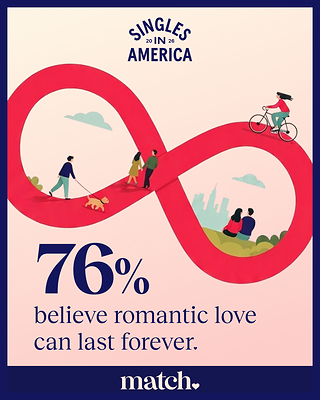
- Still betting on forever: Seventy-six percent believe romantic love can last forever, 74% believe some relationships are meant to be and 61% believe there is a perfect match or soulmate for everyone.
- Clear standards, with room for surprise: Nearly half of singles (49%) have fallen for someone they were not initially attracted to. Among those who keep a checklist for their ideal partner, 46% have fallen for someone who did not fit it.
- Compatibility can outweigh immediate chemistry: Great conversation (47%) is the leading reason singles became interested in someone they were not initially attracted to, followed by shared interests (41%) and shared values (35%). Forty-one percent would consider a second date even if the first was not exciting.
- Steadiness matters: When asked to choose what matters more in a relationship, singles are more than twice as likely to prioritize peace and emotional safety over passion and excitement (34% vs. 14%). Among women, that gap widens to 40% vs. 9%.
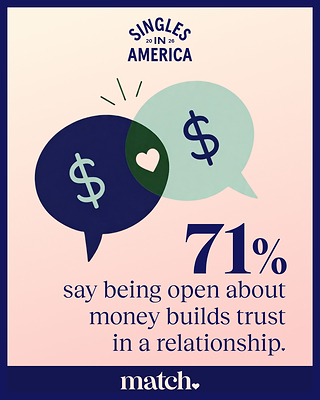
- Financial openness is a trust signal: Seventy-one percent say being open about money builds trust, 70% are open to a prenup or similar agreement and 89% agree both partners should share equally in financial decisions.
“For 15 years, Singles in America, the nation’s longest-running and most comprehensive annual study of single adults has given us a window into what people truly want from love and relationships,” said Stephanie Danzi, Global Chief Marketing Officer at Match Group. “This year, singles are telling us they are more intentional and romantic than ever. They’re thoughtful about where they invest their time and emotions. That clarity is shaping how people approach relationships today: intention is the new romance.”
Selective on Purpose, Yet Still Open to Love
Singles may be measured about the relationships they pursue, but the door to love remains wide open. Nearly three-quarters (72%) are interested in or open to dating or a relationship. While just 16% say they are actively seeking a committed relationship, another 45% say they are not actively looking but would welcome a relationship if the right person came along.
The findings point to an approach centered on making the right connection count. Singles are open to “romance and relationships” while being thoughtful about when, where and with whom they invest their time and energy.
That openness is especially high among younger generations. Eighty-one percent of Gen Z and 78% of Millennials are interested in dating or a relationship, compared with 69% of Gen X and 55% of Boomers.
If they met their perfect match tomorrow, 57% of Gen Z and 51% of Millennials say they would start dating them right away, compared with 41% of Gen X and 28% of Boomers.
Singles Are Still Betting on Forever
Being selective has not diminished singles’ belief in love. Seventy-six percent believe romantic love can last forever, 74% believe some relationships are meant to be, and 61% believe there is a perfect match or soulmate for everyone.
Belief in love at first sight also remains strong. Sixty-two percent believe in it, while nearly half (47%) say they have experienced it themselves.
Romance can look different across generations. Seven in 10 Boomers say small, everyday acts of affection matter more than big romantic gestures, while 52% of Gen Z prefer bigger romantic gestures.
Across generations, the findings show that singles still want the love story. They are looking for relationships that can pair that romance with the qualities they value in a lasting partner.
Clear Standards, With Room for Surprise
Nearly half of singles (49%) say they have fallen for someone they did not initially find attractive. And among singles who keep a checklist for their ideal partner, 46% say they have fallen for someone who did not fit it.
What turns an initial connection into something unexpectedly more are factors beyond looks. Great conversation is the leading reason singles became interested in someone they were not initially attracted to, followed by shared interests and shared values.
Singles are also willing to give promising connections another chance. Forty-one percent (41%) would consider a second date even if the first was not exciting.
The findings show that clearer standards can coexist with openness. Singles know what qualities matter to them, while leaving room for attraction and compatibility to emerge in ways they may not have anticipated.
“There’s an interesting tension in the data: singles today have clear expectations for a partner, but love still has the ability to surprise them,” said Dr. Justin Garcia, Executive Director of the Kinsey Institute at Indiana University. “Nearly half have fallen for someone they weren’t initially attracted to, and conversation, shared interests, and values can change how they see someone. Knowing what matters to you doesn’t mean knowing exactly who you’ll fall for.”
Steadiness Is Part of the Love Story
Romance still matters, but singles also want relationships that feel secure. When asked to choose between peace and emotional safety or passion and excitement, singles choose peace and emotional safety by more than two to one (34% vs. 14%).
Among women, that preference is even stronger: 40% prioritize peace and emotional safety in a relationship, compared with 9% who choose passion and excitement.
Emotional safety also shows up in how singles describe connection. Feeling respected (61%), feeling listened to (56%), and being able to share feelings without judgment (54%) are among the qualities that help singles feel emotionally safe with someone.
The findings suggest singles are looking for relationships that combine romance with steadiness, trust and emotional security.
Compatibility Extends to Money
Seventy-one percent say being open about money builds trust in a relationship, including 42% who say it builds trust significantly. Financial goals (49%), spending habits (46%), and saving or budgeting (45%) are among the topics singles associate with financial conversations.
Different financial perspectives are not necessarily dealbreakers. Fifty-six percent say they could still fall in love with someone who views finances and spending differently than they do, while 70% are open to signing a prenup or similar agreement.
At the same time, partnership matters: 89% agree both partners should share equally in financial decisions.
Together, the findings show today’s singles are looking beyond surface-level compatibility toward the emotional and practical qualities that can make a relationship work in the real world.
About Singles in America
Funded by Match and conducted in association with researchers at the Kinsey Institute at Indiana University, the 15th annual Singles in America study surveyed a demographically representative sample of approximately 5,000 U.S. singles ages 18 years and older. All data were independently collected by leveraging a nationwide and representative survey panel. The study included more than 100 questions about dating, attraction, relationships and other aspects of social life, with findings analyzed across Gen Z (18–29), Millennials (30–45), Gen X (46–61) and Boomers (62–80).
About Kinsey Institute
The Kinsey Institute at Indiana University is the world’s premier research institute on human sexuality and relationships and a trusted source for evidence-based information. With multiple research centers, global collaborations, and the largest historical archive on sexuality, the Kinsey Institute is where experts turn to understand sex and relationships. Visit kinseyinstitute.org to learn more.

 View original content to download multimedia:https://www.prnewswire.com/news-releases/match-unveils-15th-annual-singles-in-america-study-302874421.html
SOURCE Match Group